“Big picture: getting rid of leaders to get rid of wars doesn’t have a great track record. Consider the example of Barack Obama following George W. Bush. This shouldn’t surprise anyone familiar with any sort of leftist systemic analysis. Systems are the problem; politicians are symptoms of that system, at best. If anything, changing leaders can relieve the pressure to end the war. That’s what happened with Nixon, and again with Obama.”
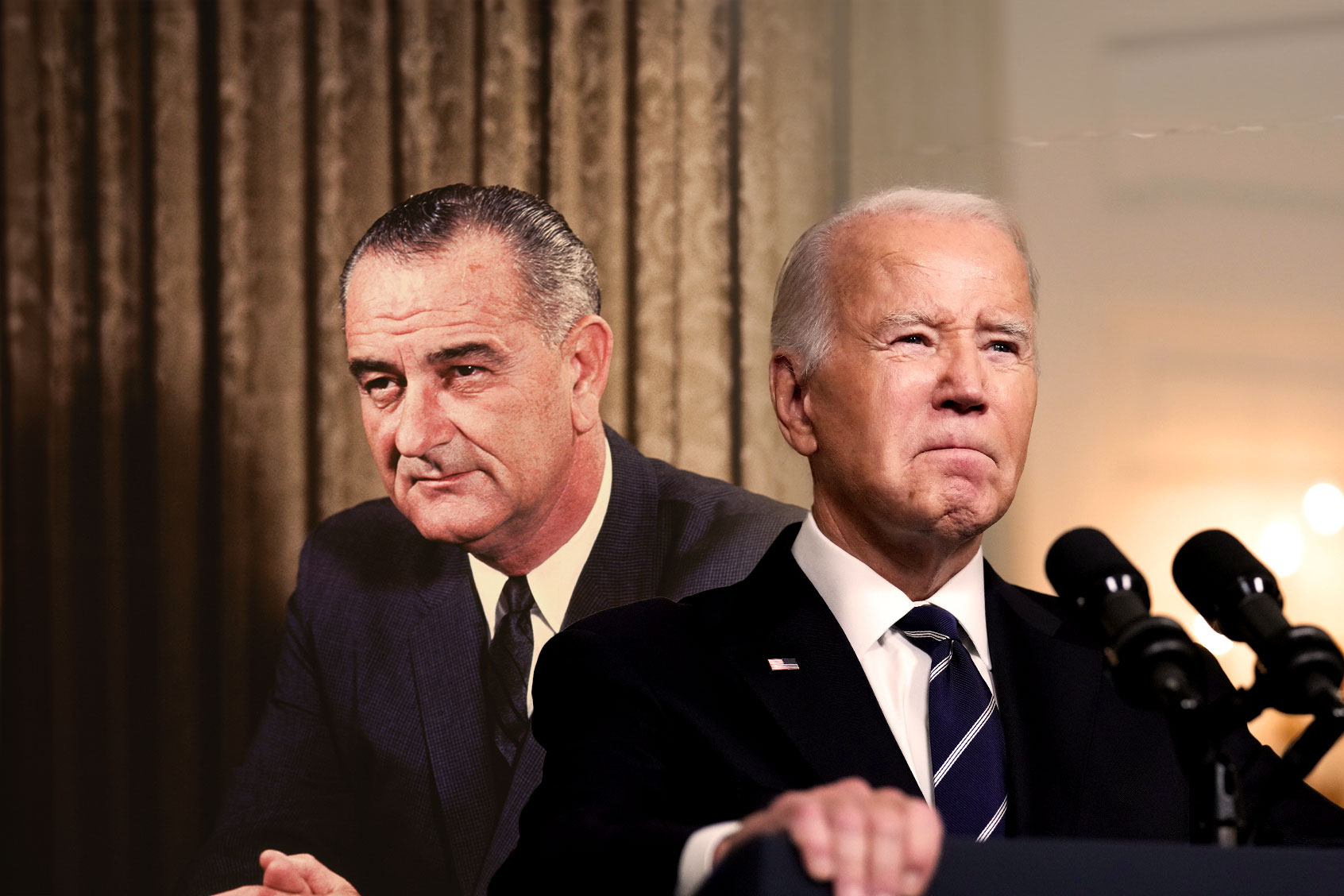
Commentary: Lessons from the Lyndon Johnson era still apply to Joe Biden and the Gaza war

Views: 336
When it comes to history and wars, war is a lot more common than non-war, and wars usually end when either one side wins or both are exhausted. To parallel one historian, peace is like a bridge, an unusual situation which needs to be explained, as opposed to gravity causing a bridge to fall down, which is to be expected.
For current politics, though, the Republicans seem to be moving toward their early-twentieth-century position of isolationism except for belligerence where the US’s interests are perceived to be involved.
The best context I’ve seen on the US and war is https://web.archive.org/web/20010302232603/http://www.nationalinterest.org/issues/58/Mead.html
As for systemic factors in general, they’re usually quite important. A parallel instance is “A lot of people make this very mistake. Perhaps the most vivid example is then-new President Obama asking why ailing automakers “can’t make a Corolla?” There’s nothing wrong with that question as a starting point for understanding the differences between U.S. and Japanese automakers. But that’s not how such questions usually get asked. Instead, […] they usually embed an assumption that an existing firm is one good manager away from turning into a completely different and much more successful entity.” — Megan McArdle