Once upon a time, auditioning for the Supreme Court would have been unseemly.
Views: 0
Once upon a time, auditioning for the Supreme Court would have been unseemly.
Views: 0
[I began the following post several years ago when Trump pulled out of the Iran nuclear deal and never got around to finishing it. Given what’s happened in the past few days, I’ve decided to publish it now as is with a few remarks. As I said, Iran is a deeply divided country. It remains so. I called it a powder keg that could explode at any time. We set the match to it. We have not effected regime change (and are unlikely to do so without “boots on the ground”). What we have likely done is trigger a civil war between the regime and its opponents. Which side, alas, controls the military and the security apparatus and has most of the guns? Thousands more of those we support will die as they are branded traitors and many on the fence “rally around the flag.” This may have been inevitable but we needn’t have been the trigger.]
Back in December 2000, I spent about a week and a half in Tehran (covering the FIDE version of the world chess championship for AP). This was during the administration of President Khatami, a pro-Western reformer. I talked with a number of people and they were uniformly pro-Western and optimistic about the future.* I heard not a single anti-American word (unless you count one person’s puzzlement at how someone could “lose” the election and still be elected–“that’s not democratic, is it?”). They saw change on the horizon and a thawing of relations with the West. Of course it didn’t happen. Iran was (and is) a deeply divided country and the people I talked to were a small, unrepresentative sample (being mostly young and all English speaking except for one conversation in broken French).
In hindsight, it seems obvious that Khatami went as far toward accommodating the West as he could within the relatively closed nature of Iran’s political system (still more open than most in the West give it credit for), i.e., within Iran’s Overton window, only to be rebuffed by both the Clinton and Bush administrations for not going far enough. Since he had nothing to show for his efforts, he was naturally voted out in favor of the hardliner Ahmadinejad, who did nothing to heal Iran’s division. After a disputed election in 2009, the moderates regained the presidency with the election of Rouhani in 2013.
A look at Iran’s demographics reveals a ticking time bomb. Exactly the opposite problem from that faced by the advanced democracies, who have an aging, shrinking population. Iran has a booming, young population and Iran’s stagnant economy can’t absorb them all into the labor force. It’s a powder keg and if it goes off, the effects will not be confined within Iran’s borders. Supreme Leader is a nice title but Ayatollah Khamenei can’t feel very comfortable or very supreme contemplating all of this.
Under the circumstances, it seems likely that the main goal of “Obama’s nuclear deal” was simply to avoid repeating the mistakes of the past. It strengthened the moderates by giving them something (sanctions relief and presumably an improved economy) to show for their moderation at the expense of the hardliners. While not perfect, it seems to be the best deal attainable (i.e., that the hardliners couldn’t block).
With these considerations in mind, I have to ask: who in Iran benefits from Trump’s withdrawal from the nuclear deal and who in Iran is harmed? The answer seems obvious: the hardliners benefit at the expense of the moderates. The sanctions “only benefit the Revolutionary Guards.” The get to boast of their nationalistic patriotism and crow that they were right when they said that the West is not to be trusted.
* Of course, my sample was both small (maybe 12-15) and skewed towards those who spoke English and would engage an American in conversation. Almost all were under 30. I did not encounter any hardliners. I take my experience, not as a representative sample, but as perhaps representative of the pro-Khatami reformers. If nothing else, it proved the existence of those who genuinely wanted an opening to the West and were pro-Western in outlook.
Views: 16
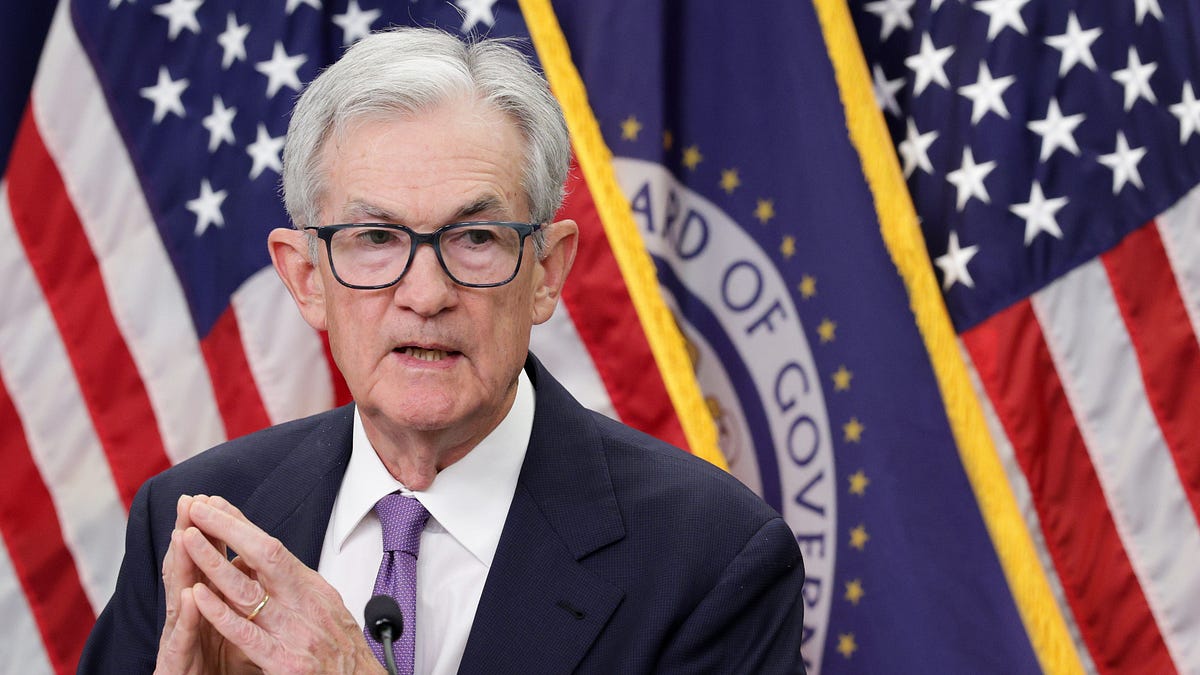
According to the NYT: “The latest rejection of his [Trump’s] budget blueprint came on Wednesday, after the House voted 341 to 79 to pass a pair of bills to fund the State and Treasury Departments, as well as other foreign aid programs, providing money for agencies that Mr. Trump had proposed eliminating entirely. …
“Lawmakers are now in the process of negotiating and approving a series of spending bills before a Jan. 30 shutdown deadline. Appropriators in both the House and the Senate have come to bipartisan agreements on eight of the 12 bills that fund the government. The Senate was racing to clear three measures that passed the House last week with money for the Commerce and Justice Departments, as well as for environmental programs.
“Even some programs that have long been despised by conservatives are instead set to sustain only modest cuts, including Voice of America, the National Endowment for Democracy and the National Endowment for the Arts.”
Views: 6
Views: 4
According to the WSJ, socialism is on the rise. Sort of. Depends on what you mean by socialism.
As I wrote several years ago, the word socialism needs to be retired. To summarize my earlier argument, it means one thing on the left (the Scandanavian model) and another on the right (the Cuban or Venezuelan model). It conveys no information beyond the speaker’s disdain for whatever’s being discussed (when used by the right) or the speaker’s disdain for our current economic system (when used by the left). It does nothing but sow confusion. The word is a victim of what C.S. Lewis called verbicide; it’s dead and needs to be buried.
Mandani, AOC, Sanders, and the others are not helping themselves (or progressivism) by touting themselves as socialists. No doubt our current economic system is deeply flawed and we could perhaps learn from the social democracies of western Europe but when most people hear the word socialist, they think, not of Sweden, but of Cuba or North Korea. These “democratic socialists” should be pushing their ideas on pragmatic grounds, i.e., the benefits outweigh the costs and they improve on what we currently have. Mandani seems poised to win his election but he could hurt progressives elsewhere with his “socialism.”
Views: 11
According to Dante (Inferno, Canto XXXIII), the souls of those who betray their guests (and are not at least some immigrants to be considered guests?) fall into the pit of hell while their still-living bodies, now inhabited by demons, continue to plague mankind on earth. So great is their evil. Is Stephen Miller perhaps one of these?

Views: 2
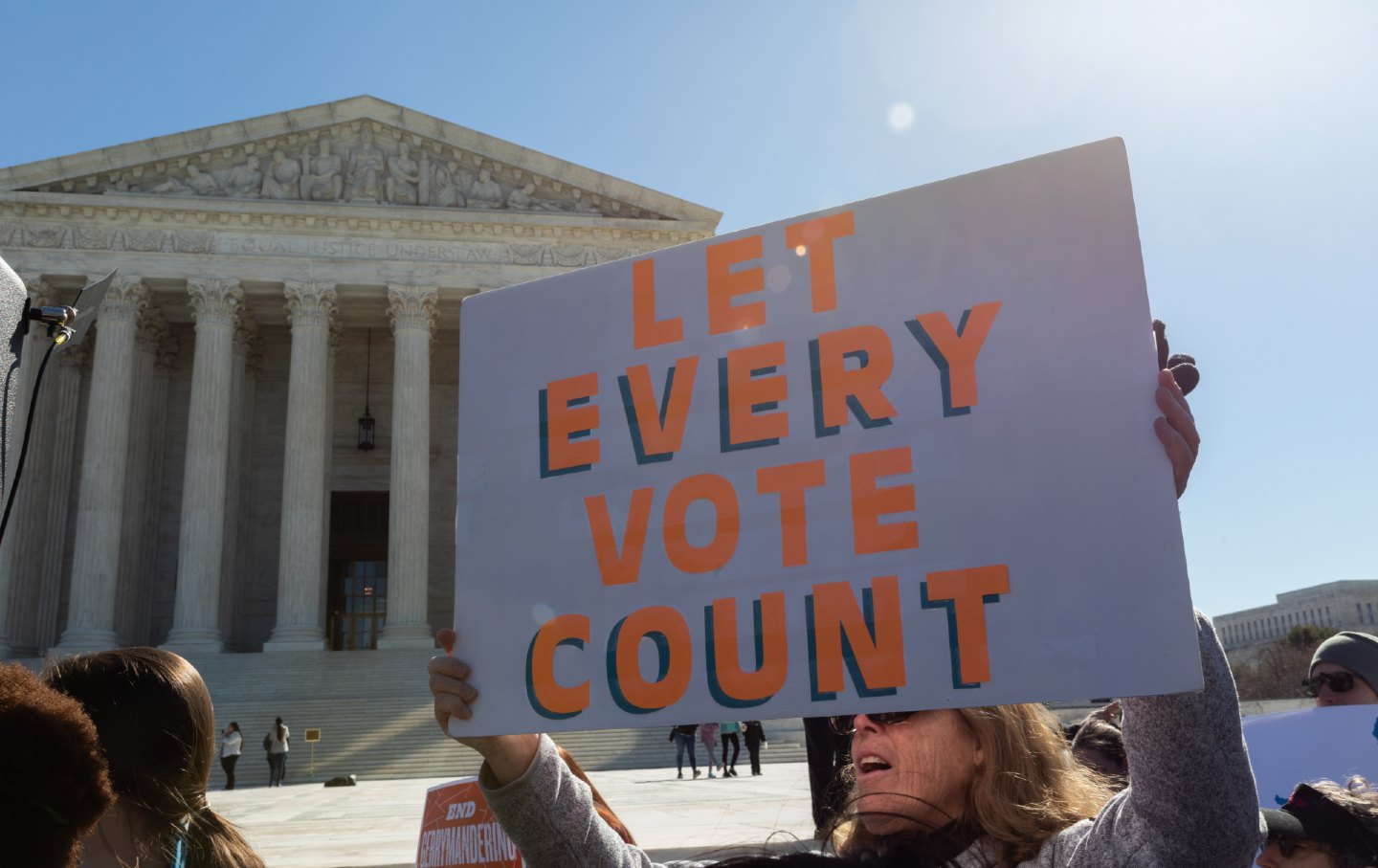
“There is no real hope that the Supreme Court will stop Texas or white people from overrepresenting themselves in Congress. The more practical response is for other Democratically controlled states to play hardball and aggressively gerrymander their congressional districts to counteract Texas. Trying to live in a society with Texas is like trying to share a Thanksgiving turkey with a rabid dog: All you can do is snatch some flesh with your hands and take your vaccinations. Etiquette and manners are no use here.”
Views: 4

Views: 8
And there is no statute of limitations on murder. And I somehow suspect that he supports the death penalty.

Views: 4
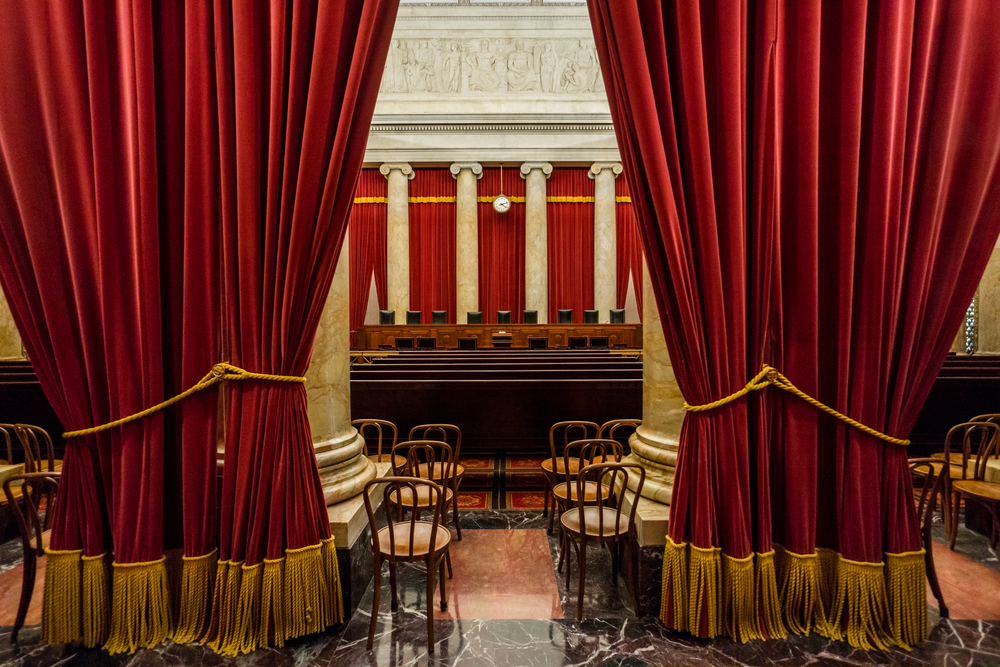
I have a slightly different idea for a simple Supreme Court that could be done by statute without amending the Constitution. Congress could create the position of Senior Justice, analogous to Senior Judges in the lower courts, who continue to sit by designation with a much reduced caseload and who get to decide which types of cases they will take. Retired Supreme Court Judges generally become Senior Judges. Justice Souter continues (as far as I know) to hear cases on the First Circuit. Here’s how it would work. Senior Justices would no longer vote on writs of certiorari (i.e., on which cases the Court will take) but, once the Court has granted certiorari, they could choose to take part in that case, e.g., by so informing the Chief Justice within 30 days. The result would be to draw Justices Breyer, Kennedy, and Souter out of retirement for any cases they deeply care about. If Justice Sotomayor were to retire and be replaced with another liberal, that could undermine the current 6-3 conservative majority (if you ever had tie, e.g., at 6-6, that would merely affirm the lower court ruling in that case without creating binding Supreme Court precedent).
I have no idea how feasible this would be in practice but I throw it out as something that might be possible, if only because Congress can do it by statute (or they could simply enlarge the Court but that might be a bridge too far for some, even on the Democratic side).
Views: 12


